News, events and opportunities in digital and experimental Humanities | | | | | | Huminfra Newsletter – Issue #4 – 2026 | |
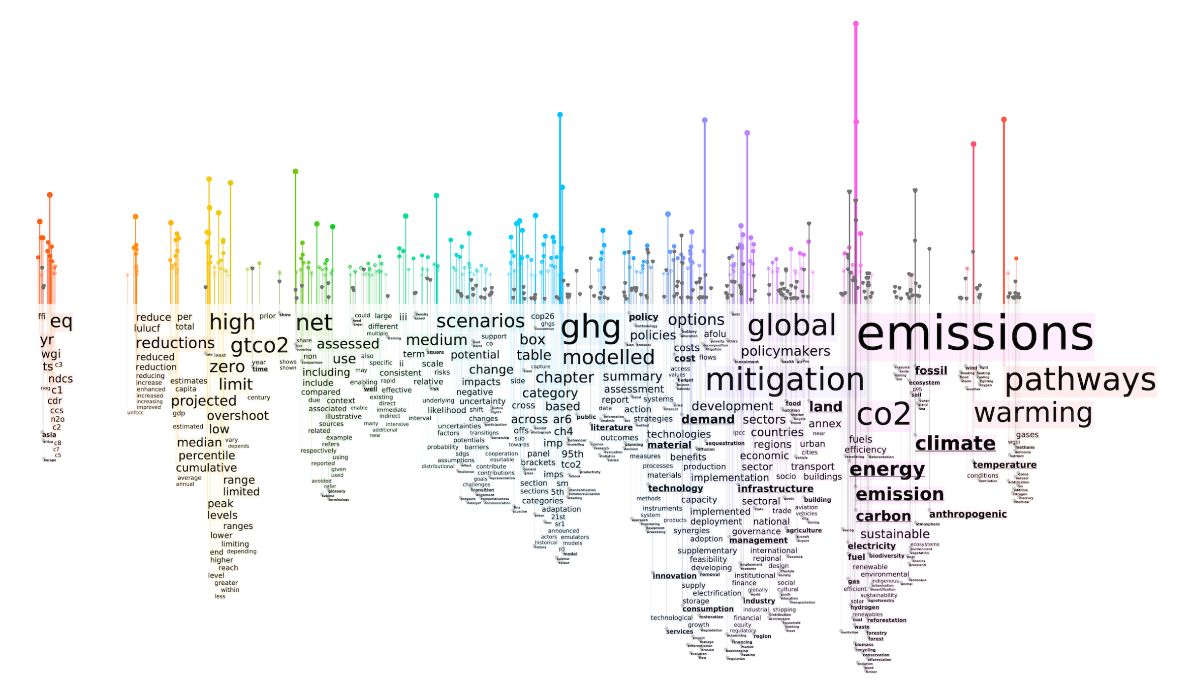
Word Rains and Word Clouds: Visualizations for exploring and comparing texts in the humanities, arts, and social sciences
This free and open hybrid workshop aims at bringing together developers and researchers, primarily from the humanities, with an interest in using text visualization for exploring texts. When: Thursday May 7 at 13:00–16:00
Where: Room C360, Humanisten, Renströmsgatan 6, University of Gothenburg & online via Zoom
Registration deadline: April 28 The workshop will include a short tutorial in how to use the Word Rain text visualization technique, as well as presentations of research where word clouds or word rains have been used. It will conclude with a discussion sharing experiences from ongoing research projects of the possibilities and problems related to the study of text collections using visualization. No previous knowledge of text visualization is required. See wordrain.org, for more information on the Word Rain technique.
The workshop is organized by Gothenburg Research Infrastructure in Digital Humanities (GRIDH), University of Gothenburg & Digital Human Sciences (DHV), Stockholm University and supported by the national research infrastructures Huminfra, Språkbanken CLARIN & InfraVis.
For more information and how to register |
News from KBLab
KBLab
has recently
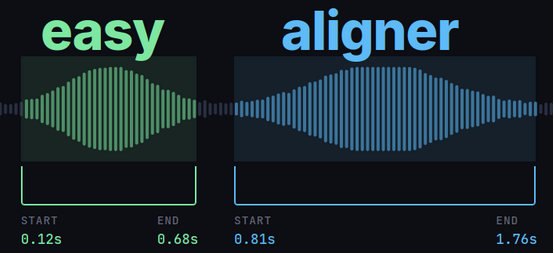
released easyaligner, a library for forced alignment of text transcripts
with audio. Developed at the National Library of Sweden, it can be used to
align e-texts with audiobooks, parliamentary records with recordings of
debates, podcasts with corresponding transcripts, and more.
Read more here.
KBLab has also published a chapter within the volume Flows &
Frictions: Mixed Methods for AI-Driven Research On Historical Media (LIR.skrifter,
Borås, 2026), edited by Daniel Brodén and Lina Samuelsson, and dedicated to the
memory of Jonas Ingvarsson. Our text explores the possibilities and challenges
of using AI models as an entry point for exploring digital image collections.
We conclude with the observation that: “Beyond enhancing discovery and access, introducing AI-based search like
CLIP into library workflows can also reshape the identity of the collection
itself. ... Rather than reinforcing the existing architecture of the archive,
these techniques have the potential to reframe it – altering what is seen, what
is studied, and ultimately the stories that can be told from the collections.”
The volume is freely available online here and
builds on work carried out within Huminfra. |
News from Språkbanken Text
UD_Swedish-SweLL is a parallel Universal Dependencies treebank based on SweLL, the Swedish Learner Language corpus. Its first version, released as part of UD 2.17, consists of 510 randomly selected sentence-correction pairs from SweLL-gold, a corpus of essays written by adult learners of Swedish as a second language (L2). For more information about the treebank, see the official README file. Download the corpus here or individually here |
The Ig Nobel Euro Tour visited Lund University Humanities Lab
The Ig Nobel Euro Tour was celebrated in Lund on April 21 with an entertaining and thought-provoking event at Akademiska föreningen at Lund University. Previous Ig Nobel prize-winners, researchers from Lund University, and the founder of the Ig Nobel Prize, Marc Abrahams, took part in the ceremony. The Ig Nobel Prize, which has been awarded annually since 1991 by Improbable Research, honor achievements so surprising that they make people laugh, then think. The prize is intended to celebrate the unusual, honor the imaginative — and spur people’s interest in science, medicine, and technology. For example, the 2021 Ig Nobel Biology prize went to linguists Susanne Schötz, Robert Eklund, and Joost van de Weijer, ’for analyzing variations in cats’ purring, chirping, chattering, trilling, tweedling, murmuring, meowing, moaning, squeaking, hissing, yowling, howling, growling, and other modes of cat–human communication’. Susanne and Joost are members of Lund University Humanities Lab. During the Ig Nobel Euro Tour’s visit to Lund a tour of the Humanities Lab was of course part of the agenda! The April 21 event was live-streamed on YouTube and can be watched here Read more about the Ig Nobel Euro Tour in Lund here | Important discussions on humanities research on AI and its implications for people and society | | | | On April 4, Kungl. Vitterhetsakademien and WASP-HS hosted a symposium to identify and discuss the need for humanities research on AI, autonomous systems, and their implications for people and society. The aim was to gather expertise, experiences, suggestions, and ideas that can help further develop knowledge and expertise in this important field of research. Huminfra was present through Anna Foka, Director of the Huminfra node Centre for Digital Humanities and Social Sciences at Uppsala University, and research leader of the WASP-HS research environment AI Futures of Culture and Memory, who moderated a panel discussion on AI, literature, film, theatre, and art, and Marianne Gullberg, Director of Huminfra, who participated in a panel on AI and language. |
BAL-ADRIA digital methods summer school in Zadar
The BAL-ADRIA Summer School in Digital Humanities 2026, will be held at
University of Zadar, Croatia, June 15–19, 2026. The programme covers a wide
range of practical digital humanities methods and tools — including data
organisation and cleaning, corpus and text analysis, network analysis, image
processing, programming for the humanities, AI-supported methods, and more. More details and registration | Postdoctoral fellow in digital humanities
Humlab at Umeå University is looking for a postdoctoral fellow to work within the research cluster AI Futures of Culture and Memory financed by the Wallenberg AI, Autonomous Systems and Software Program – Humanity and Society (WASP-HS). The research cluster is led by Uppsala University, Umeå University, Chalmers University of Technology, KTH Royal Institute of Technology, and Linnaeus University. The cluster as a whole revolves around three interconnected themes. First, it examines the ways in which AI changes the perception, production, preservation, and interpretation of culture and memory, as well as its influence on creativity and the dynamics of human-machine interaction. Second, it investigates how collaborations driven by AI are reshaping creative professions and cultural institutions, while also addressing the legal, ethical, and infrastructural challenges that accompany these transformations. Third, the cluster investigates bias in AI systems that process cultural data and can create new speculative and featuring approaches. We welcome applicants with a doctoral degree in ethnology, cultural heritage studies, archive studies, museology, gender studies or equivalent. Application deadline: May 28, 2026
Full details and application instructions | Fully funded PhD positions in the international Max Planck Research School for Multimodal Digital Humanities (IMPRS-MDH)
The newly established international Max Planck Research School for Multimodal Digital Humanities (IMPRS-MDH), jointly hosted by the University of Zurich and the Bibliotheca Hertziana – Max Planck Institute for Art History in Rome, is now inviting applications for up to five fully funded PhD positions. This innovative program brings together cutting-edge research at the intersection of digital technologies, art history, and cultural heritage, offering an exceptional environment for doctoral training between Zurich and Rome. Candidates will have the opportunity to explore multimodal approaches to humanities research—integrating text, image, and spatial analysis within a rich interdisciplinary framework. The positions are fully funded and open to outstanding applicants from diverse disciplinary backgrounds, including art history, digital humanities, computer vision, and related fields. Application deadline: May 31, 2026
Full details and application instructions | DARIAH Annual event 2026This year we seek to explore how digital, social and institutional
infrastructures can support engaged research, and nurture generosity,
participation and shared creativity in the digital arts and humanities. Registration
is now open!
The 2026 DARIAH Annual Event will take place on May 26–29 in Rome,
Italy.
Read more about the conference here |
Transformations: Call for proposals for Special Issues
A new call
for proposals has been launched for special issues in Transformations: A
DARIAH Journal, inviting contributions from the digital humanities
community. The journal welcomes proposals exploring digital methods, data, and
research practices across the arts, humanities, and social sciences. Deadline for submissions: June 30, 2026.
For more information |
Friday Frontiers webinar series
Feminist Digital Humanities: Intersections in PracticeDate: May, 8, 2026. Time: 11.30 AM
(CEST) This
presentation introduces feminist digital humanities and shows how it can
highlight marginalized voices and challenge existing structures in research and
knowledge production. Speakers: Monika Barget (University of
Maastricht), Jenny Bergenmar (University of Gothenburg), & Susan Schreibman
(University of Maastricht) For more information about the Friday Frontiers
Webinar Series and registration | What's onEvents and educational opportunities organised by the Huminfra nodes and collaborative partners | Seminar series: AI for Humanities and Humanities for AI (HumAI)
HumAI is a new faculty-wide seminar series supported by the Faculty of Humanities at University of Gothenburg, and the national research infrastructures Huminfra and Språkbanken. The series explores both sides of the growing relationship between artificial intelligence and the humanities: what AI can offer humanities research, and how humanities perspectives can contribute to the development of more human-centred and discipline-sensitive AI tools and methods. Seminar dates: 24 April (n.b. new date!), 21 May, 18 June at 15:00–17:00
@On-site at C350, Humanisten (Gothenburg) and online via this Zoom link Find out more | Digital textanalys – drop-in!
Är du student eller forskare intresserad av att analysera texter eller videomaterial med digitala metoder, språkteknologi, språkmodeller och AI? Välkommen att få råd om vilka metoder och digitala verktyg du kan använda dig av från forskare och experter inom digital humaniora och språkteknologi. Under vårterminen anordnar Göteborgs forskningsinfrastruktur för digital humaniora (GRIDH) och Språkbanken Text textanalytiska och språkfokuserade drop in-tillfällen en onsdag i månaden. Drop in-tillfällen följs av Språkbankens Lunch and Learn sessioner kl. 12-13 i gästmatsalen vid Humanisten. Datum: 20 maj och 17 juni kl. 10:15-11:00 (GRIDH), 11:15-12:00 (Språkbanken Text)
@Rum C360, Humanisten (Göteborg) eller online via denna Zoom-länk Läs mer här | 6 May GPS (Global Positioning System) & data georeferencing – Group tutorialThis tutorial will provide a general introduction to the use of RTK GPS for georeferencing spatial datasets. Different coordinate systems will be described, and users will have the possibility to get to know how to set up a GPS station, collect data and export them in a GIS. As an additional point, strategies to georeference 3D models derived from different acquisition techniques will be introduced. @Lund University Humanities Lab
Find out more | 11 May Humlab Talk: Alasdair MilneWith: Alasdair Milne, University of Glasgow
Alasdair Milne is a researcher in the philosopher of technology, with a focus on machine learning R&D and its cultural implications. He recently completed his PhD with Serpentine Galleries and King’s College London where he is part of the Creative AI Lab. He is currently a Postdoctoral Research Associate at the University of Glasgow and a Researcher at Antikythera. @Humlab, Umeå University & Online via Zoom: 13:15–14:45 Find out more and register | 12 May Workshops co-located with the LREC conferenceWelcome to these workshops, co-organised by Huminfra nodes and co-located with the fifteenth biennial Language Resources and Evaluation Conference (LREC), Palma, Mallorca (Spain). - RAPID-6@MENTAL.ai
Resources and Processing of linguistic, para-linguistic and extra-linguistic Data from people with various forms of cognitive/psychiatric/developmental impairments. LEGAL 2026 and CALD-pseudo 2026
Joint Workshop on Legal and Ethical Issues in Human Language Technologies (LEGAL2026) and Computational Approaches to Language Data Pseudonymization, Anonymization, De-identification, and Data Privacy (CALD-pseudo 2026).
RESOURCEFUL
The fourth international workshop on the role of resources in the age of large language models.
NLP4Ecology
The 2nd Workshop on Ecology, Environment, and Natural Language Processing.
| 18 May Qualitative research with generative AI: Technological reflexivity for interpretative technology This workshop illustrates the use of generative AI ("chatbots") in social science and humanities qualitative research with text-based date. Focus will be on models that mitigate some of the ethical issues of AI use, data protection issues, bias, as well as research ethics. The workshop is led by Professor Andrea Voyer (Sociology, SU) and Elida Izani Binti Ibrahim (PhD student, Sociology, SU). More details on the use that Andrea and Elida made of generative AI can be found in a recent publication on Qualitative research with LLM chatbots: Technological reflexivity for interpretative technology the use of generative AI for reflexive qualitative research and a preprint . @Online via Zoom, 13:00–15:00 Register here by May 13. A Zoom link will be sent out once you have registered. | 21–22 May International conference on academic freedom, human rights and the role of academia Academic freedom is increasingly challenged by political pressure, funding structures, and external interests. When the independence of knowledge production is weakened, this is not only an academic concern but a human rights issue and a threat to democracy. This international conference is arranged by the Lund University Human Rights Profile Area, in collaboration with the Swedish Institute for Human Rights. The conference brings together scholars and practitioners to discuss the role of academia in a changing political and institutional landscape, comparing experiences across national contexts and exploring ways to safeguard academic freedom. Participation is free of charge. Registration required.
@Lund University Find out more and register | 27–29 May A practical introduction to eye tracking This three-day intensive course in eye tracking methodology gives participants a practical introduction to eye tracking, with a focus on both theoretical grounding in using eye movements for research and hands-on exercises with state-of-the-art eye tracker hardware and software. During the course, hardware and software from Tobii, SR research, and Pupil Labs are available. The teachers are active researchers with over 20 years experience from eye movement and eye tracker research. @Lund University Humanities Lab Find out more | 18–20 August Nordic Prosody XIV conferenceKTH Royal Institute of Technology hosts the 14th Nordic Prosody in Stockholm. The conference series focuses on the forms and functions of prosodic patterns in Nordic languages and in languages spoken across the Baltic Sea region. The organising department Speech, Music and Hearing (TMH) was founded in 1951, 75 years ago, by Gunnar Fant. The day before the conference, on August 17, this is celebrated with seminars and festivities. NPXIV participants are welcome to sign up for attendance. @KTH Royal Institute of Technology, Stockholm Find out more about the conference and CFP | 16 September Digital Parliamentary Data in Action (DiPaDA) 2026The 3rd edition of Digital Parliamentary Data in Action conference will take place in Ljubljana, Slovenia, as a one-day pre-conference event with the Language Technologies and Digital Humanities (JTDH) 2026. DiPaDA seeks to bring together researchers from the humanities, social sciences, computer science, and cultural heritage sectors to share results, methods, and reflections on the creation, analysis, and use of parliamentary datasets. This year's special topic are historical parliamentary data. @Ljubliana, Slovenia
Find out more | 14–15 oktober Digikult – digitalt kulturarv i praktikenDigikult arrangeras av Riksantikvarieämbetet i samarbete med Kungliga biblioteket, Riksarkivet och länsstyrelsens Kulturmiljöforum. Årets tema är ”Det sammanlänkande kulturarvet”, som kan handla om hur länkade öppna data kan skapa något större av det digitaliserade kulturarv som finns i olika samlingar och register, men också om hur kulturarvet länkar oss samman på alla möjliga olika sätt. @Uppsala universitet
Läs mer här | Coming this fallStay tuned for these upcoming events! Further information and dates coming soon. | Open Data and Data Management in the Humanities: Less Complicated Than You Think!This fall, we are launching a seminar and workshop series on open data and data management for humanities researchers. The series consists of four sessions covering topics such as open science in the humanities, FAIR and CARE principles, legal and ethical aspects, and practical workflows for managing research data. More information and dates will be announced soon! | Webinar: AI and academic writing in the humanitiesEarly this fall, a webinar will be held on AI, writing, and the boundaries of the humanities: from style and cognitive processes to policy issues, gray areas, and assessment in humanities research. Organised by: The Swedish School of Library and Information Science, University of Borås and Humlab, Umeå University | | | | | |